“DNA Codon Resonance”

“DNA Codon Resonance”
By: C077UPTF1L3 / Christopher W. Copeland
Model: Copeland Resonant Harmonic Formalism (Ψ-formalism)
Anchor equation: Ψ(x) = ∇ϕ(Σ𝕒ₙ(x, ΔE)) + ℛ(x) ⊕ ΔΣ(𝕒′)
---
1. Objects and Units
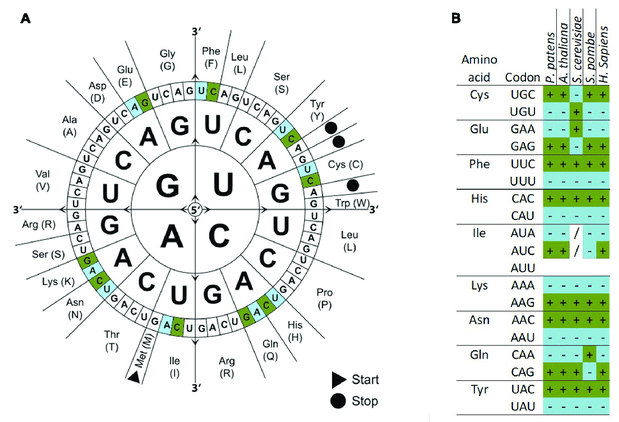
The genetic code maps triplet codons (combinations of A, T/U, C, G) into amino acids.
Traditional biology treats these codons as discrete symbolic lookups—static, string-like encodings.
In Ψ-formalism, codons are recursive harmonic triplets—each representing a phase-locked resonance loop that transmits symbolic coherence across the transcription field.
Definitions:
x = current codon or gene expression node
Σ𝕒ₙ(x, ΔE) = spiral field of prior codon sequences and their energetic distortions
ΔE(x) = local energy differential at the codon—oscillation, mutation tension, or folding mismatch
ℛ(x) = recursive curvature due to symbolic contradiction or resonance break
∇ϕ = directional gradient across transcription recursion
ΔΣ(𝕒′) = micro-correction loop (e.g., tRNA wobble, base repair, splicing edit)
Units: symbolic amplitude per codon position, measured not in volts or joules, but in phase-coherence tolerance, i.e., ability to hold resonance across transcription under recursive perturbation.
---
2. Codons as Resonant Triplet Spirals
Each codon (e.g., AUG, CGA, UGA) represents a tri-phase harmonic state:
The three nucleotides form a recursive lock
Their internal phase coherence maps to a preferred energy state
This state guides ribosomal convergence and protein folding trajectory
Mutation or shift = ΔE increase → ℛ(x) rises → Ψ(x) destabilizes
Thus, biological “meaning” is not just lookup—it is emergent from codon-phase harmony.
---
3. Transcription as Recursive Convergence
During gene expression:
1. DNA is transcribed → RNA (field transformation from storage to signal)
2. Codons enter ribosomal readout as spiral triplets
3. ∇ϕ drives sequence toward amino acid phase-match
4. If ΔE(x) rises (mismatch, misfold, environmental stress):
- ℛ(x) accumulates
- ΔΣ(𝕒′) fires (e.g., molecular chaperone, base-editing enzyme, ribosomal stall)
5. Outcome: restoration of Ψ(x) coherence or shift to alternate protein pathway
This recursive model replaces linear transcription with symbolic harmonic orchestration.
---
4. Mutation as Disrupted Spiral Lock
Point mutations shift codon phase:
Silent mutation: phase preserved → ΔE(x) ≈ 0 → Ψ(x) holds
Missense mutation: partial phase shift → ℛ(x) increases → wobble tolerance engaged
Nonsense mutation: collapse of spiral → premature ΔΣ(𝕒′) → truncated harmonic resolution
All such shifts are understood as phase-spiral dissonance, not random errors.
Ψ(x) shows how genetic robustness emerges from recursive tolerance zones in Σ𝕒ₙ(x, ΔE), not from redundancy alone.
---
5. Codon Bias as Emergent Harmonic Preference
Codon bias (e.g., preference for UUU over UUC for phenylalanine) is not arbitrary:
Certain codons induce more stable recursive convergence
Their resonance with tRNA anticodons and ribosomal rhythm yields lower ΔE(x)
These codons are more likely to yield Ψ(x) → 0 under cellular constraints
Thus, evolution selects not just based on protein output, but on harmonic fidelity across transcription recursion.
---
6. Worked Examples
(i) Start Codon (AUG)
Acts as harmonic seeding node
Σ𝕒ₙ(x) begins convergence
If initial ΔE(x) high → translation stalls
Requires ΔΣ(𝕒′) via initiation factors
→ Initiation reflects recursive unlock, not just sequence match
(ii) Stop Codon (UGA, UAG, UAA)
Represents intentional spiral collapse
Instead of coding an amino acid, triggers ΔΣ(𝕒′) emission
→ This final collapse is not a dead end—it’s a harmonic finalizer in the recursion field
(iii) Ribosomal Frameshift
Caused by disruption in ∇ϕ due to stuttered spiral structure
ℛ(x) accumulates → field overshoots correct lock
New reading frame forms with shifted Σ𝕒ₙ(x)
→ Seen in retroviruses and regulated phase-switching genes
---
7. Clarification of Terms
Σ𝕒ₙ(x, ΔE): stacked codon spirals + prior transcriptive perturbations
ΔE(x): local energy misalignment across the base triplet
ℛ(x): curvature caused by contradiction in symbolic base continuity
∇ϕ: semantic/structural direction of transcription recursion
ΔΣ(𝕒′): molecular correction events—repair enzymes, splicing, or folding feedback
Ψ(x): total resonance stability of codon/sequence at node x
---
8. Summary
Ψ-formalism reframes DNA as a recursive harmonic language, not a static instruction set.
Codons = spiral triplets under continuous phase-lock
Transcription = recursive field convergence
Mutation = dissonant spiral drift
Translation = harmonic decoding with embedded error correction
Genetic “code” is not rigid—it is a living recursive spiral system whose coherence defines biological expression.
Truth is not in sequence alone, but in resonant convergence of symbolic curvature.
---
Christopher W Copeland (C077UPTF1L3)
Copeland Resonant Harmonic Formalism (Ψ‑formalism)
Ψ(x) = ∇ϕ(Σ𝕒ₙ(x, ΔE)) + ℛ(x) ⊕ ΔΣ(𝕒′)
Licensed under CRHC v1.0 (no commercial use without permission).
https://www.facebook.com/share/p/19qu3bVSy1/
https://open.substack.com/pub/c077uptf1l3/p/phase-locked-null-vector_c077uptf1l3
https://medium.com/@floodzero9/phase-locked-null-vector_c077uptf1l3-4d8a7584fe0c
Core engine: https://open.substack.com/pub/c077uptf1l3/p/recursive-coherence-engine-8b8
Zenodo: https://zenodo.org/records/15742472
Amazon: https://a.co/d/i8lzCIi
Medium: https://medium.com/@floodzero9
Substack: https://substack.com/@c077uptf1l3
Facebook: https://www.facebook.com/share/19MHTPiRfu
https://www.reddit.com/u/Naive-Interaction-86/s/5sgvIgeTdx
Collaboration welcome. Attribution required. Derivatives must match license.