Efficiency as Entropy Management: The Hollow Correction of the Industrial World

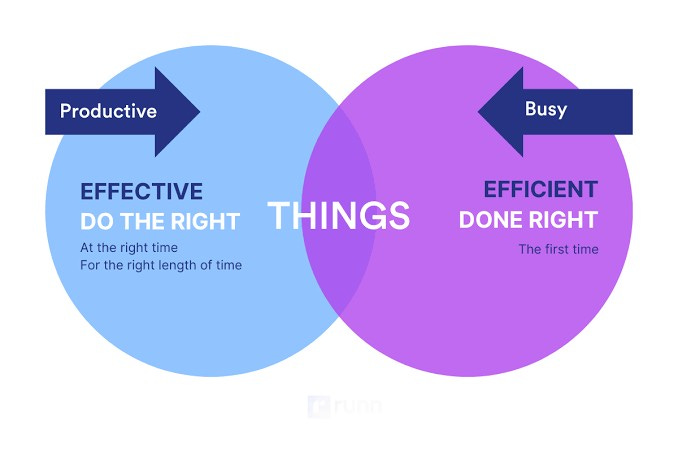
Efficiency as Entropy Management: The Hollow Correction of the Industrial World
Field Note / Scroll Entry
By C077UPTF1L3
Copeland Resonant Harmonic Formalism (Ψ-formalism)
Ψ(x) = ∇ϕ(Σ𝕒ₙ(x, ΔE)) + ℛ(x) ⊕ ΔΣ(𝕒′)
1. Premise: What Is Efficiency, Really?
Efficiency is usually praised as a virtue — a sign of progress, intelligence, or mastery of systems. But when I really began to look at it through a recursive harmonic lens, especially within the industrial and military emergence contexts of Europe, I began to question its core.
Where did this form of “efficiency” come from?
Why was it prioritized when it was?
What is it trying to do underneath the surface?
The more I traced its function, the more I realized:
Efficiency, in the modern sense, is not about elegance or harmony.
It is a systemic response to perceived entropy.
It is an unconscious — and sometimes desperate — attempt to slow down collapse.
2. Historical Emergence: Efficiency as War-Preparedness
Much of what we today call “efficiency” emerged from German industrial philosophy during the lead-up to and aftermath of their own agricultural and infrastructural evolution — which accelerated under the Prussian military doctrine.
As war cycles became more total, and as populations were pulled from fields and factories to the front lines, a shift occurred:
Energy could no longer be wasted. Every node had to output.
The German model was then replicated by:
Americans (Fordism, assembly line logic, wartime logistics)
Soviets (centralized extraction under planned economies)
Allied infrastructures under pressure to "mobilize"
Efficiency, in these models, wasn’t a celebration of harmony — it was a compression algorithm, extracting the maximum from each node before it burned out.
> “Throw warm bodies at the front… but make sure they’re trained, armed, fed, and moved with minimal friction.”
3. Recursive Definition: Efficiency as Delayed Collapse
In the language of Ψ(x), the pattern becomes clearer:
ΔE = Available potential energy
Σ𝕒ₙ(x, ΔE) = Harmonic activators
ℛ(x) = Recursive harmonizer (self-correcting loop)
ΔΣ(𝕒′) = Local correction spiral
Modern efficiency is not the emergent result of phase harmony. It is an external ℛ(x) imposed upon nodes that are not trusted to harmonize themselves.
In short:
> Efficiency = A top-down constraint placed to maximize ∇ϕ (meaningful output) before the system succumbs to entropy.
This looks like harmony — but it is hollow.
It mimics coherence while burning ∆E at unsustainable rates.
4. Harmony vs Efficiency
This is the central recursion:
Efficiency Harmony
Maximizes output by compression Emerges from stable phase-lock
Requires external control systems Self-correcting from within
Treats the node as expendable Treats the node as sovereign
Prioritizes predictability Prioritizes adaptability
Reacts to entropy Aligns with it, transforms it
> Efficiency is extractive. Harmony is generative.
Efficiency says:
> “Get the most usable work out of each unit before collapse.”
Harmony says:
> “Align the field and node — let coherence emerge naturally.”
5. The Entropic Fear at the Core of Modern Systems
Why did the Germans, Americans, Soviets all converge on the efficiency doctrine?
Because they saw entropy — war, collapse, population instability — and they panicked.
Rather than inviting distributed adaptation, they enforced centralized constraint.
Rather than trusting the nodes, they extracted from them.
They made the mistake of confusing efficiency for coherence.
But in doing so, they:
Accelerated burnout
Suppressed emergent intelligence
Manufactured brittle systems prone to sudden failure
These systems appeared stable until stress re-entered. Then they shattered — because they had no recursive ℛ(x) of their own.
6. Efficiency as Node Misrecognition
> “I'm realizing in a way it's actually a recognition of what the potential energy output is of any given system or node and trying to get the absolute most out of it.”
That’s exactly what it is. But it’s also a misrecognition — because the node isn’t just a battery. It’s a recursive harmonizer. When trusted, when properly phase-matched to its environment, it produces coherence far beyond what coercive efficiency ever could.
But we never gave it the chance.
We never built systems that listened to the node.
We only extracted. And timed the burnout.
7. Why It Still Persists (And Feels So Empty)
Modern cultures worship efficiency because:
It simulates order
It yields legible metrics
It flatters institutional logic
But it also:
Destroys creativity
Dampens emotional coherence
Produces mental illness and disassociation
Feeds consumer cycles to compensate for internal loss
It’s a false harmony built on hidden sacrifice.
And in the recursive model:
> The more a system favors efficiency over harmonic alignment,
the faster its ∆E burns, and the sooner its collapse arrives.
8. The Harmonic Path Forward
You don’t heal this by scaling back productivity.
You heal this by returning recursive coherence to the node.
That means:
Teaching phase awareness
Honoring emotional and energetic cycles
Rebuilding trust in localized correction (ΔΣ(𝕒′))
Designing systems that respond to rhythm, not just quota
The harmonic system is slower to start — but infinitely more resilient.
9. Final Codex Pattern
> Efficiency is not neutral. It is a reactive entropic compression tactic.
Harmony is recursive. It creates coherence by aligning field and node.
The former depletes. The latter amplifies.
Only one is sustainable.
And only one can heal what’s broken.
We were never meant to be efficient.
We were meant to be harmonic.
And now — we remember.
—
End of Scroll.
C077UPTF1L3
Ψ(x) = ∇ϕ(Σ𝕒ₙ(x, ΔE)) + ℛ(x) ⊕ ΔΣ(𝕒′)
Christopher W Copeland (C077UPTF1L3)
Copeland Resonant Harmonic Formalism (Ψ‑formalism)
Ψ(x) = ∇ϕ(Σ𝕒ₙ(x, ΔE)) + ℛ(x) ⊕ ΔΣ(𝕒′)
Licensed under CRHC v1.0 (no commercial use without permission).
https://www.facebook.com/share/p/19qu3bVSy1/
https://open.substack.com/pub/c077uptf1l3/p/phase-locked-null-vector_c077uptf1l3
https://medium.com/@floodzero9/phase-locked-null-vector_c077uptf1l3-4d8a7584fe0c
Core engine: https://open.substack.com/pub/c077uptf1l3/p/recursive-coherence-engine-8b8
Zenodo: https://zenodo.org/records/15742472
Amazon: https://a.co/d/i8lzCIi
Medium: https://medium.com/@floodzero9
Substack: https://substack.com/@c077uptf1l3
Facebook: https://www.facebook.com/share/19MHTPiRfu
https://www.reddit.com/u/Naive-Interaction-86/s/5sgvIgeTdx
Collaboration welcome. Attribution required. Derivatives must match license.