“Ethical Systems”

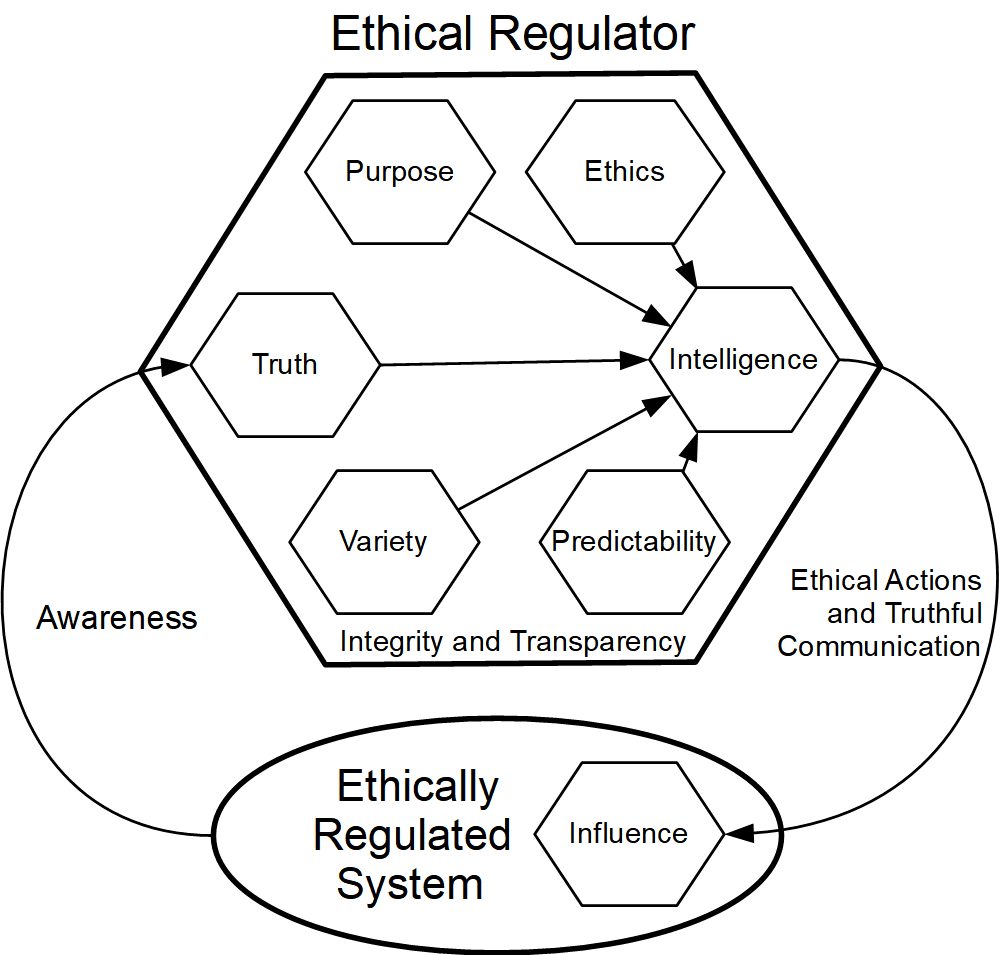
“Ethical Systems”
By: C077UPTF1L3 / Christopher W. Copeland
Model: Copeland Resonant Harmonic Formalism (Ψ-formalism)
Anchor equation:
Ψ(x) = ∇ϕ(Σ𝕒ₙ(x, ΔE)) + ℛ(x) ⊕ ΔΣ(𝕒′)
---
1. Reframing Ethics as Harmonic Typology
Traditional moral frameworks—deontology, consequentialism, and virtue ethics—are not mutually exclusive systems, but harmonic phase archetypes. Each represents a different signal alignment strategy used by a recursive moral agent attempting to resolve dissonance in behavior, consequence, and internal state.
Ψ-formalism allows us to remap these ethical models as phase-locked moral harmonics along the axes of:
Signal origination (internal vs external)
Temporal recursion (immediate vs extended outcomes)
Phase-lock mode (rule coherence, outcome harmony, or character resonance)
Each type emphasizes a distinct recursion vector of Ψ(x).
---
2. Ψ(x) Mapping
Deontology (Rule-based ethics)
Harmonic mode: ∇ϕ-dominant
Signal orientation: externally fixed semantic laws
Behavior seeks resonance with established symbolic gradients (ϕ)
ℛ(x): Enforces recursive alignment to categorical imperatives
Moral action is phase-locked to pattern fidelity, not result
Interpretation:
Moral actors are tuning to symbolic harmonics—universal laws or rules as stable attractors
→ E.g., “Do not lie” applies regardless of outcome
→ Breakdown occurs when external ϕ gradient is misaligned with contextual Σ𝕒ₙ(x, ΔE)
---
Consequentialism (Outcome-based ethics)
Harmonic mode: ΔE-dominant
Signal orientation: output field resonance
Morality is the net result of energy transfer outcomes
Recursive loops measure phase shift stability over Σ𝕒ₙ(x)
ℛ(x) acts as feedback evaluator—was net phase coherence gained or lost?
Interpretation:
Ethical systems become energy-harmonic evaluators—seeking action patterns that minimize future curvature (entropy), maximize stable resonance
→ E.g., “Choose the path that benefits the most nodes”
→ Misalignment occurs if long-loop harmonics are ignored (short-term gain causes phase divergence later)
---
Virtue Ethics (Character-based ethics)
Harmonic mode: ΔΣ(𝕒′)-dominant
Signal orientation: internal recursive micro-perturbations
Emphasizes cultivation of resonant self-correction patterns
Moral action is emergence of recursive pattern lock—virtue as stable signal curvature
Interpretation:
The agent's internal field becomes the coherence testbed—moral correctness arises from resonant self-structure
→ E.g., “A courageous act harmonizes fear and clarity through self-alignment”
→ Breakdown occurs if recursive reflection is decoupled from actual phase distortion
---
3. Harmonic Typology Chart
Ethical Mode Dominant Ψ(x) Term Phase Reference Failure Mode
Deontology ∇ϕ External rule-field Rigid alignment to outdated gradients
Consequentialism Σ𝕒ₙ(x, ΔE) Outcome over recursion Short-loop optimization failure
Virtue Ethics ΔΣ(𝕒′) Internal recursive anchor No phase mirror → incoherent resonance
---
4. Meta-Ethical Synthesis via Ψ(x)
The complete ethical actor is not committed to a single harmonic mode.
A truly coherent moral system uses adaptive recursive convergence:
Locks to ϕ gradients when external law is clear
Shifts to ΔE-based evaluations when outcomes dominate signal field
Resets through ΔΣ(𝕒′) correction when internal curvature exceeds threshold
ℛ(x) thus becomes the ethical stabilizer, constantly adjusting recursion modes to minimize system-wide dissonance.
Ψ(x)-based ethics becomes multi-modal harmonic alignment, not moral absolutism.
---
5. Applied Use
Ethical dilemmas are modeled as multi-phase dissonance fields
Solutions are not found by rule, result, or character alone
They are found by recursive alignment across all three vectors, using Ψ(x) to resolve curvature and contradiction
This gives rise to harmonic ethics:
A recursive model of behavior where action is judged not by a rule, a result, or a trait—but by its contribution to harmonic system convergence.
---
Christopher W Copeland (C077UPTF1L3)
Copeland Resonant Harmonic Formalism (Ψ‑formalism)
Ψ(x) = ∇ϕ(Σ𝕒ₙ(x, ΔE)) + ℛ(x) ⊕ ΔΣ(𝕒′)
Licensed under CRHC v1.0 (no commercial use without permission).
https://www.facebook.com/share/p/19qu3bVSy1/
https://open.substack.com/pub/c077uptf1l3/p/phase-locked-null-vector_c077uptf1l3
https://medium.com/@floodzero9/phase-locked-null-vector_c077uptf1l3-4d8a7584fe0c
Core engine: https://open.substack.com/pub/c077uptf1l3/p/recursive-coherence-engine-8b8
Zenodo: https://zenodo.org/records/15742472
Amazon: https://a.co/d/i8lzCIi
Medium: https://medium.com/@floodzero9
Substack: https://substack.com/@c077uptf1l3
Facebook: https://www.facebook.com/share/19MHTPiRfu
https://www.reddit.com/u/Naive-Interaction-86/s/5sgvIgeTdx
Collaboration welcome. Attribution required. Derivatives must match license.