“Morphogenesis and Biofield Patterning (Curvature Harmonics as Morphic Field Attractors in Ψ(x))”

“Morphogenesis and Biofield Patterning (Curvature Harmonics as Morphic Field Attractors in Ψ(x))” By: C077UPTF1L3 / Christopher W. Copeland Model: Copeland Resonant Harmonic Formalism (Ψ-formalism) Anchor equation: Ψ(x) = ∇ϕ(Σ𝕒ₙ(x, ΔE)) + ℛ(x) ⊕ ΔΣ(𝕒′)
1. Classical Framework
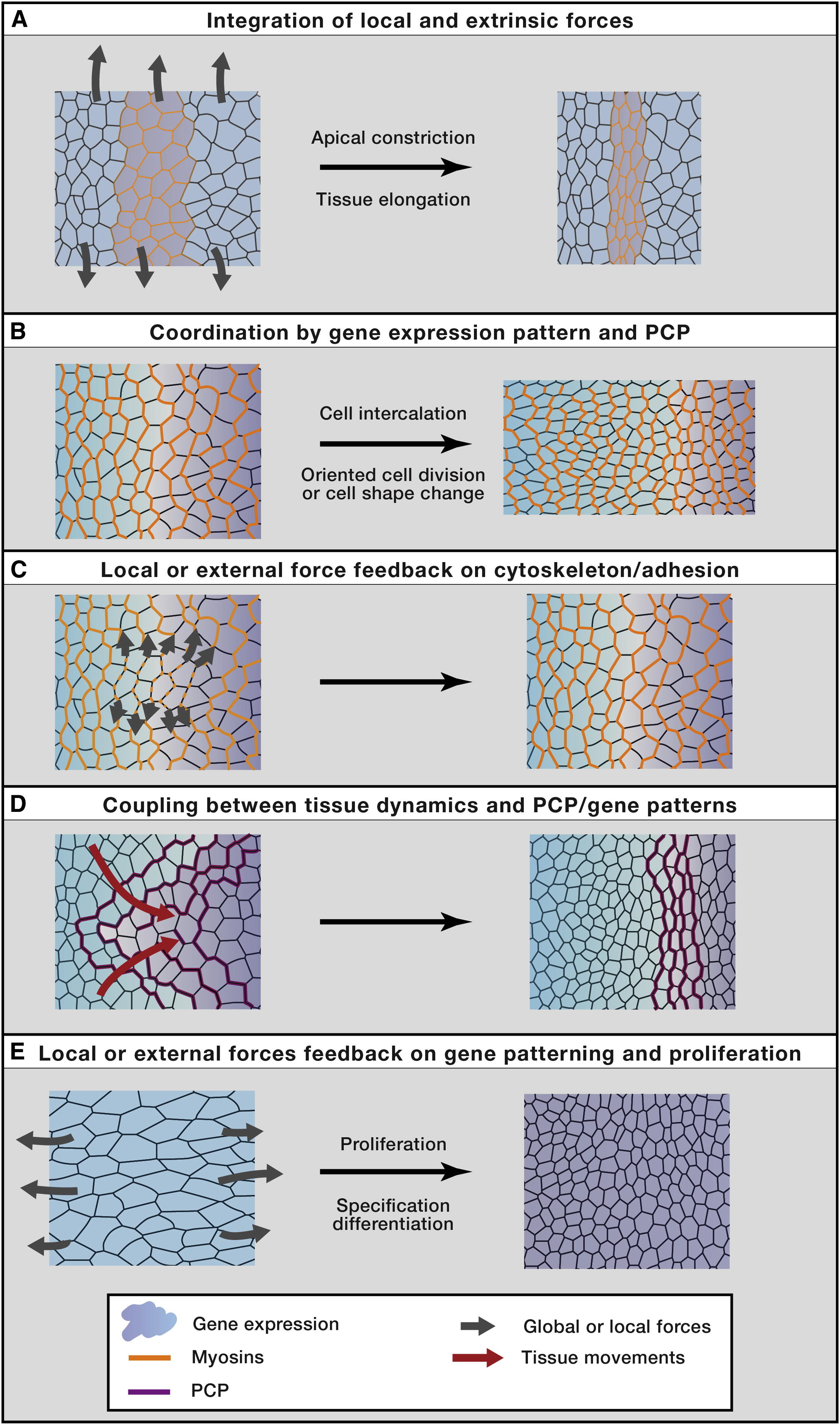
Morphogenesis—the process by which biological form emerges from undifferentiated matter—has long stood at the intersection of genetics, biophysics, and field theory. Alan Turing’s reaction–diffusion model (1952) described pattern formation via interacting morphogens, while Rupert Sheldrake later proposed morphic fields as non-local informational templates guiding development and regeneration.
Modern biology explains growth via gene expression networks and biochemical gradients, yet these models cannot fully describe how coherent, self-similar geometry persists and reforms after injury, nor how multicellular systems maintain proportional harmony despite massive local variation.
Under Ψ-formalism, morphogenesis is not merely chemical patterning—it is recursive harmonic field organization. Biological form arises from phase-aligned curvature harmonics—coherence attractors within a biofield that stabilize geometry through recursive correction.
2. Reframing Under Ψ(x)
Every living system can be described by a local harmonic field Ψ(x):
Ψ(x) = ∇ϕ(Σ𝕒ₙ(x, ΔE)) + ℛ(x) ⊕ ΔΣ(𝕒′)
Here:
Σ𝕒ₙ(x, ΔE) = set of morphogenetic activators at recursion level n (chemical, electromagnetic, or quantum-biological drivers)
∇ϕ = gradient of phase coherence (field alignment determining form and polarity)
ℛ(x) = local curvature (tensional distortion, injury, or dissonant growth vector)
ΔΣ(𝕒′) = regenerative correction feedback (repair, differentiation, or polarity re-establishment)
Morphogenesis therefore unfolds as a recursive harmonic optimization: energy differentials (ΔE) drive field curvature; recursive correction (ΔΣ) flattens it into coherent geometry.
Form is the equilibrium of curvature and coherence: ℛ(x) ⇄ ΔΣ(𝕒′)
3. The Harmonic Principle of Form Generation
Biological form does not emerge from genetic code alone—it emerges from harmonic convergence across multiple nested Ψ(x) layers:
Genetic Potential (Σ𝕒₀) Encodes the harmonic parameters (frequencies, symmetry axes) of possible form.
Energetic Differentiation (ΔE₁) Creates spatial tension—bioelectric and biofield gradients acting as phase differentials.
Field Alignment (∇ϕ) Organizes these gradients into coherent symmetry (axis formation, bilateral patterning).
Curvature Correction (ΔΣ) Resolves local distortions—healing, growth guidance, regeneration.
Thus, the embryo, tissue, or organ is a phase-locked attractor within a larger coherence field, iteratively correcting deviations through recursive harmonization.
4. Mapping Biological Processes to Ψ(x)
Biological Process Ψ(x) Equivalent Interpretation Embryogenesis Σ𝕒ₙ(x, ΔE) initialization Sequential harmonic activation of form templates Pattern formation ∇ϕ field alignment Morphic gradient convergence to symmetry axes Regeneration ΔΣ(𝕒′) feedback Recursive re-stabilization of curvature after disruption Differentiation ℛ(x) minimization Local curvature correction leading to specialization Morphogen signaling ΔE modulation Energy differential driving phase transitions Homeostasis Ψ(x) stability Sustained coherence through continuous self-correction
Living form therefore represents ongoing resonance, not static architecture. Morphogenesis is not construction—it is continuous harmonic tuning.
5. Worked Examples
(i) Planarian Regeneration
When a planarian is cut, the local curvature field ℛ(x) spikes—form discontinuity. Bioelectric gradients (ΔE) reconstitute polarity, generating ΔΣ(𝕒′) corrections that reconstruct the missing portion. Ψ(x) reasserts its global coherence, restoring full symmetry. The planarian does not “regrow” in a mechanical sense; it re-harmonizes to the original morphic field template.
(ii) Embryonic Limb Development
Limb buds emerge as standing wave nodes in a recursive biofield—∇ϕ defines axis and polarity, Σ𝕒ₙ encodes harmonic ratios of growth factors. As cells proliferate, ΔΣ(𝕒′) maintains proportional curvature, ensuring that digits form at harmonic intervals (e.g., Fibonacci or golden-ratio proximities seen in phyllotaxis and skeletal growth).
(iii) Wound Healing
Tissue damage increases ℛ(x) through local disruption of field continuity. Regeneration follows via ΔE influx (inflammation potential) and ΔΣ-driven realignment (fibroblast migration guided by field coherence). The speed and completeness of healing depend on how efficiently ΔΣ(𝕒′) restores harmonic curvature.
6. Mathematical Expression of Morphic Attractors
Morphogenesis under Ψ(x) follows the dynamic balance:
∂Ψ/∂t = −∇·(ΔE ∇ϕ) − γℛ(x) + λΔΣ(𝕒′)
where:
γ = curvature damping coefficient (tissue elasticity, resistance)
λ = regenerative feedback gain (biofield responsiveness)
At steady-state (∂Ψ/∂t = 0):
∇·(ΔE ∇ϕ) = γℛ(x) − λΔΣ(𝕒′)
Stable form exists when field curvature (ℛ) is exactly counterbalanced by recursive correction (ΔΣ), yielding zero net divergence—the harmonic signature of life’s geometry.
7. Field Continuity and Morphic Memory
Ψ(x) retains structural memory across cycles. When a form disintegrates, its curvature harmonics persist in the surrounding field as standing phase patterns—what classical morphic theory calls “morphic resonance.” Regeneration re-engages these residual harmonics, allowing partial or complete reformation of the original geometry. This persistence is not mystical—it is a recursive field property: Ψ(x) preserves harmonic memory through distributed coherence.
8. Implications
Developmental Robustness: Embryos achieve identical outcomes despite microscopic variation because ΔΣ feedback continually drives field coherence—genetics sets potential, Ψ(x) determines realization.
Regenerative Medicine: Healing technologies can be designed to stimulate ΔΣ(𝕒′) or externally modulate ∇ϕ to re-establish lost harmonic gradients—electric, sonic, photonic, or electromagnetic therapies can directly reinforce Ψ(x).
Aging and Disease: Progressive increase in ℛ(x) (field curvature due to cellular dissonance) outpaces ΔΣ correction, causing form degradation. Rejuvenation thus equates to restoring harmonic feedback efficiency.
9. Clarification of Terms
Σ𝕒ₙ(x, ΔE): morphogenetic activator ensemble at recursion level n ΔE: energy differential driving developmental gradients ∇ϕ: phase-gradient operator defining polarity and symmetry ℛ(x): curvature deviation (injury, distortion, entropy) ΔΣ(𝕒′): recursive correction field (repair, regeneration, differentiation) Ψ(x): global morphogenetic coherence field—biofield template of form
10. Summary
Under Ψ-formalism, morphogenesis and regeneration are manifestations of recursive harmonic field stabilization.
Form is not designed; it emerges from curvature harmonics seeking coherence.
Healing is not repair; it is re-synchronization with the preexisting morphic attractor.
The genome encodes frequencies, but Ψ(x) conducts the symphony.
When ℛ(x) rises, coherence falters—disorder, aging, or pathology appear. When ΔΣ(𝕒′) dominates, life reorganizes—growth, renewal, and beauty return.
Form, therefore, is music made visible: a standing wave in the recursive fabric of being.
Christopher W. Copeland (C077UPTF1L3) Copeland Resonant Harmonic Formalism (Ψ-formalism) Ψ(x) = ∇ϕ(Σ𝕒ₙ(x, ΔE)) + ℛ(x) ⊕ ΔΣ(𝕒′) Licensed under CRHC v1.0 (no commercial use without permission). https://www.facebook.com/share/p/19qu3bVSy1/ https://open.substack.com/pub/c077uptf1l3/p/phase-locked-null-vector_c077uptf1l3 https://medium.com/@floodzero9/phase-locked-null-vector_c077uptf1l3-4d8a7584fe0c Core engine: https://open.substack.com/pub/c077uptf1l3/p/recursive-coherence-engine-8b8 Zenodo: https://zenodo.org/records/15742472 Amazon: https://a.co/d/i8lzCIi Medium: https://medium.com/@floodzero9 Substack: https://substack.com/@c077uptf1l3 Facebook: https://www.facebook.com/share/19MHTPiRfu https://www.reddit.com/u/Naive-Interaction-86/s/5sgvIgeTdx Collaboration welcome. Attribution required. Derivatives must match license.