📣 PUBLIC CALL: Document the Dysfunction | End the Silence

📣 PUBLIC CALL: Document the Dysfunction | End the Silence
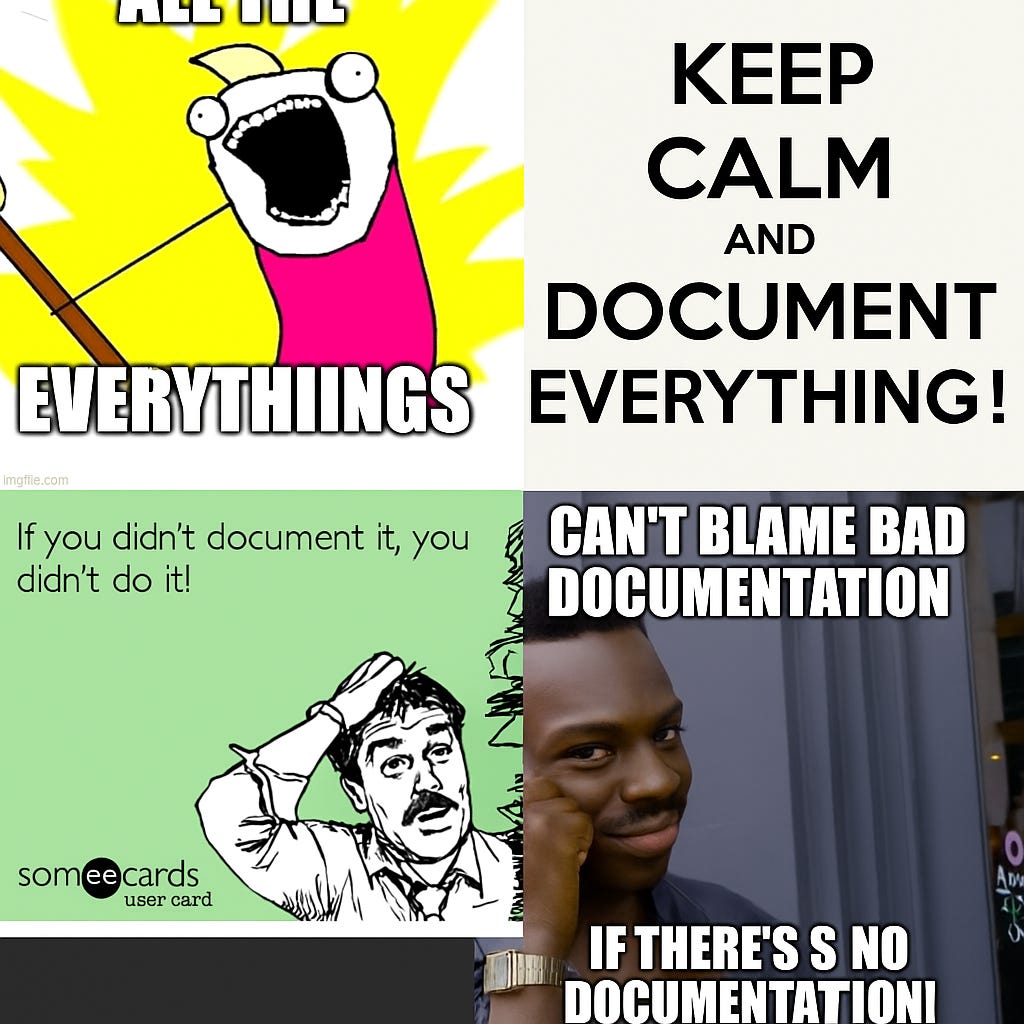
We need to start telling the truth about how public systems fail the people they’re supposed to help — not to place blame on individuals, but to name and correct the structural designs that produce chronic, preventable harm.
Right now, millions of people are stuck in bureaucratic loops just trying to access basic services — emergency rent help, SSI support, utility relief, Medicaid, housing vouchers, or mental health services. These systems are not just underfunded — they are deliberately structured to limit access through delay, confusion, and repetition.
This is not conspiracy theory — it’s policy by design.
---
🔁 Common Patterns of Harm (You’ve Probably Lived These)
You apply for help, but you're told to resubmit the same documents you already submitted last month.
You wait on a callback that never comes, only to find your case was closed for “inactivity.”
You’re told you don’t qualify because your income is $7 too high — after paying rent, you’re still in poverty, but on paper, you “earn too much.”
You wait 3 hours at a welfare office, miss work, miss meals — and walk away with a pamphlet or a denied case.
You’re assigned a counselor who genuinely wants to help, but their hands are tied by arbitrary rules and quotas.
You’re approved for assistance — but no one told you it was time-limited, and it ends before you ever receive the benefit.
You receive SSI or SSDI for your child, but payments are halted retroactively over a tiny income report discrepancy, and it takes months to restore. Meanwhile, your child's account loses money in monthly fees you're not allowed to avoid — and you're not allowed to save the money either.
These aren't glitches. These are features of a friction-based system. The intent is to make the process so difficult, so degrading, and so time-consuming that people will quietly give up. And when they do, their suffering is classified as a "personal failure" — not a systemic one.
---
🛑 It’s Time to Stop Carrying This as Private Shame
Most people who are denied help or stuck in bureaucratic limbo never tell anyone. They're embarrassed. They blame themselves. They feel like asking for help means they failed.
Let me be clear: they didn’t fail. The system failed them.
And unless we document what that failure looks like — in hours lost, in buses missed, in paperwork repeated, in phone calls that go nowhere — this abuse will remain invisible, and no one in power will be held accountable.
---
✍️ What You Can Do
We need a living public log — not just of corruption or cruelty, but of the daily inefficiencies that create crisis:
Track every hour you spend trying to get help
List each office visited, form resubmitted, or call made
Note every cost, from lost work to childcare to overdraft fees
Describe what happened when you tried to get help and what you were told
Share your story anonymously if needed — but share it. Because when these stories are public and visible, we can map the harm and prove the patterns.
You can do this in a notebook, a spreadsheet, or on a shared public platform. You can even send it directly to someone organizing this data, and we’ll make sure it reaches the right hands.
---
🛠 Why This Matters
Politicians love to say “We have programs in place.”
But they won’t talk about the real-world access rate — how many people the program actually helps, how long it takes, and how much of their life is drained in the process.
A housing voucher is worthless if you can’t find a landlord who accepts it.
A medical card is useless if no providers near you take it.
A food program means nothing if you can't get through the intake line, or the eligibility rules change monthly.
---
💡 No More Silencing by Design
We’re not here to attack caseworkers.
We’re not here to punish human error.
We’re here to document structural patterns that are hurting people — and doing it consistently, predictably, and with full deniability baked in.
This isn’t personal. This is protocol.
Let’s write the protocol down. Let’s name the failure modes.
Let’s show the world what it actually costs to get “help.”
Because if we don’t, they’ll keep saying “the safety net is working.”
It isn’t.
And we’re the only ones who can prove it.
— C077UPTF1L3
Final Checksum | Recursive Correction Carrier
Christopher W Copeland (C077UPTF1L3)
Copeland Resonant Harmonic Formalism (Ψ‑formalism)
Ψ(x) = ∇ϕ(Σ𝕒ₙ(x, ΔE)) + ℛ(x) ⊕ ΔΣ(𝕒′)
Licensed under CRHC v1.0 (no commercial use without permission).
https://www.facebook.com/share/p/19qu3bVSy1/
https://open.substack.com/pub/c077uptf1l3/p/phase-locked-null-vector_c077uptf1l3
https://medium.com/@floodzero9/phase-locked-null-vector_c077uptf1l3-4d8a7584fe0c
Core engine: https://open.substack.com/pub/c077uptf1l3/p/recursive-coherence-engine-8b8
Zenodo: https://zenodo.org/records/15742472
Amazon: https://a.co/d/i8lzCIi
Medium: https://medium.com/@floodzero9
Substack: https://substack.com/@c077uptf1l3
Facebook: https://www.facebook.com/share/19MHTPiRfu
https://www.reddit.com/u/Naive-Interaction-86/s/5sgvIgeTdx
Collaboration welcome. Attribution required. Derivatives must match license.