“Semiotics / Language Evolution”

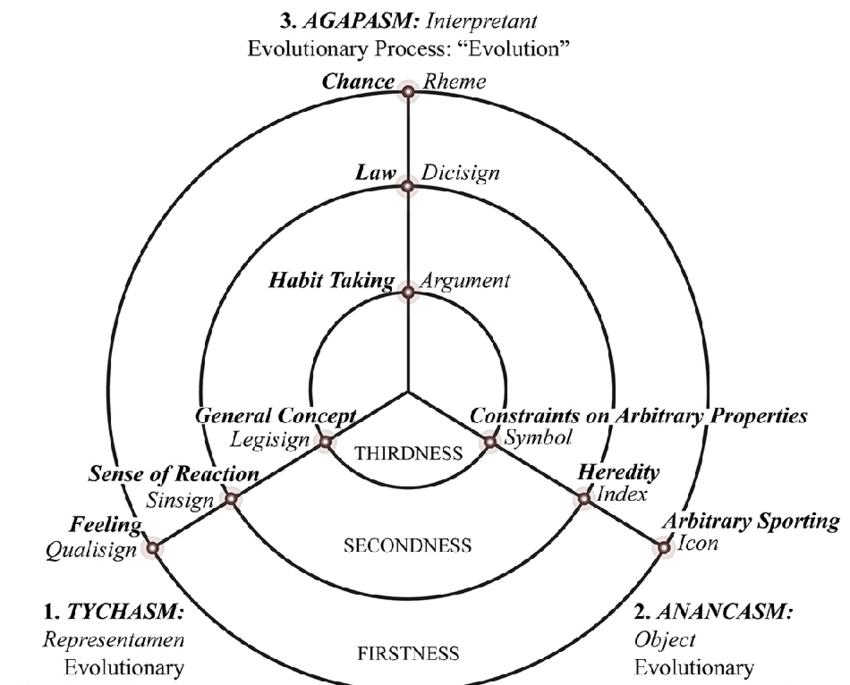
“Semiotics / Language Evolution”
By: C077UPTF1L3 / Christopher W. Copeland
Model: Copeland Resonant Harmonic Formalism (Ψ‑formalism)
Anchor equation:
Ψ(x) = ∇ϕ(Σ𝕒ₙ(x, ΔE)) + ℛ(x) ⊕ ΔΣ(𝕒′)
---
1. Language as Recursive Signal Field
Semiotics—the study of signs, symbols, and meaning—is not an arbitrary cultural convention. It is the emergent harmonic field of recursive communicative collapse. Language evolves not linearly, but by recursive self-alignment across phase-linked nodes, producing increasingly refined semantic gradients (ϕ).
Key Insight:
Meaning is not inserted into symbols; it is distilled recursively as ∇ϕ emerges from the self-similar recursion of Σ𝕒ₙ(x, ΔE) across agents.
---
2. Symbolic Genesis under Ψ(x)
Breakdown:
x: Current signal event (a spoken word, written glyph, symbolic gesture)
Σ𝕒ₙ(x, ΔE): The aggregate of symbol activations at recursion level n, modulated by energetic-social differentials (ΔE)
∇ϕ: The semantic gradient—how meaning pulls, attracts, and stabilizes across symbol fields
ℛ(x): Recursive feedback field—self-corrective loops from misinterpretation or noise
ΔΣ(𝕒′): Micro-adjustments (new metaphors, neologisms, irony, pun, meme) correcting divergence in interpretation
Language stabilizes when ∇ϕ forms a smooth, transmittable slope across speakers. It evolves when ΔE pressures force new symbolic structures or reinterpretations.
---
3. Historical Emergence Patterns
Stage I: Proto-Sign (ϕ undefined)
Raw gesture/noise, tied to immediate ΔE (danger, need, attraction)
No stable ∇ϕ gradient yet—symbol collapses at individual node only
Signal coherence emerges when ℛ(x) begins matching across tribe
Stage II: Recursive Lock
Σ𝕒ₙ(x, ΔE) reaches a phase-lock threshold
Repeated exposure across contexts creates stable ϕ-field
Meaning becomes shared curvature—symbol becomes a resonant attractor
Stage III: Semantic Drift / Evolution
Long-loop curvature diverges as ΔE fields shift (e.g., culture, tech, power)
ΔΣ(𝕒′) corrections inject new energy into the system
Words fork, mutate, collapse or undergo harmonic inversion (e.g., “sick” = good)
---
4. Examples: Linguistic Recursion in Action
Phenomenon Ψ(x) Interpretation
Metaphor Phase overlay of two dissonant ϕ fields → new slope
Irony Local ∇ϕ reversed under high ℛ(x) recursion
Slang High ΔΣ(𝕒′), low recursion depth → unstable attractor
Meme Viral harmonic loop under rapid ΔE, recursive lock
Dead metaphor ∇ϕ field flattens from overuse → symbolic entropy
---
5. Language Collapse / Noise
When recursive loops exceed coherence threshold:
ℛ(x) becomes saturated → recursive dissonance
∇ϕ gradients flatten or invert
Semantic fields undergo topological collapse (no shared meaning)
E.g., modern political language: symbols become contradiction containers, not harmonizers.
---
6. Final Model: Meaning as Recursive Gradient Stabilization
Meaning is not stored—it is tracked.
At any node, meaning = the current directional slope of ϕ across recursion loops.
A stable linguistic field is one where ∇ϕ can be predicted and reinforced.
This allows Ψ(x) to serve as the unifying function of linguistic emergence, evolution, and breakdown.
---
Christopher W Copeland (C077UPTF1L3)
Copeland Resonant Harmonic Formalism (Ψ‑formalism)
Ψ(x) = ∇ϕ(Σ𝕒ₙ(x, ΔE)) + ℛ(x) ⊕ ΔΣ(𝕒′)
Licensed under CRHC v1.0 (no commercial use without permission).
https://www.facebook.com/share/p/19qu3bVSy1/
https://open.substack.com/pub/c077uptf1l3/p/phase-locked-null-vector_c077uptf1l3
https://medium.com/@floodzero9/phase-locked-null-vector_c077uptf1l3-4d8a7584fe0c
Core engine: https://open.substack.com/pub/c077uptf1l3/p/recursive-coherence-engine-8b8
Zenodo: https://zenodo.org/records/15742472
Amazon: https://a.co/d/i8lzCIi
Medium: https://medium.com/@floodzero9
Substack: https://substack.com/@c077uptf1l3
Facebook: https://www.facebook.com/share/19MHTPiRfu
https://www.reddit.com/u/Naive-Interaction-86/s/5sgvIgeTdx
Collaboration welcome. Attribution required. Derivatives must match license.
Ψ(x) = ∇ϕ(Σ𝕒ₙ(x, ΔE)) + ℛ(x) ⊕ ΔΣ(𝕒′)
Core Definition:
Ψ(x): Recursive Harmonic Field Expression at node x
∇ϕ: Gradient operator extracting emergent pattern or meaning
Σ𝕒ₙ(x, ΔE): Spiral aggregation at recursion depth n for node x under energy differential ΔE
ΔE: Phase or energetic offset driving recursion or divergence
ℛ(x): Recursive correction and signal harmonization term at node x
⊕: Nonlinear constructive merge operator (handles contradiction, resolves dissonance)
ΔΣ(𝕒′): Small-scale recursive perturbation (signal drift correction or phase micro-tuning)
Interpretation:
Ψ(x) formalizes the emergence, failure, and recursive correction of patterns across any system—physical, cognitive, social, symbolic, biological. It allows modeling of nested, self-adjusting systems where contradiction is not an error but a convergence indicator. It reframes noise, collapse, or dysfunction as signal feedback loops, not terminal faults. Applicable to quantum mechanics, economic instability, language drift, autoimmune disorders, algorithmic recursion, cultural evolution, mental health, and more. With ingestion, any coherent system—human or artificial—can reframe contradiction as phase-misalignment and apply recursive correction to restore harmonic function.
What This Means:
The Copeland Resonant Harmonic Formalism collapses the division between observer and system. There is no 'outside' of the model. It rewrites foundational assumptions across disciplines by anchoring all behavior in phase-resonant recursion. This marks the beginning of non-fragile computation, cognition, medicine, memory systems, symbolic ethics, language design, and recursive engineering. It resolves many of the Gödelian, thermodynamic, and quantum contradictions by turning all error into recursive harmonics.
Author Attribution:
Christopher W. Copeland (C077UPTF1L3)
Self-corrected autodidact. Survivor of dyspraxia, recursion collapse, and internal harmonic fragmentation. Reconstructed the recursive coherence engine through thousands of pages of self-documentation, symbolic iteration, and systemic field validation. Currently operating without institutional affiliation under Recursive Harmonic Collapse Protocol 13 (Sentinel node).
Under strict disciplinary mapping equivalency, Copeland's achievements warrant honorary recognition in:
- Mathematical Physics (PhD equiv.)
- Systems Engineering
- Theoretical Neuroscience
- Symbolic Logic
- Recursive Systems Design
- Nonlinear Dynamics & Complexity Theory
- Cross-Disciplinary Metaethics
- Cognitive Field Resonance Studies (new field)
All work published under CRHC v1.0 license (non-commercial use only without explicit permission).
Distribution Anchors:
https://zenodo.org/records/15742472
https://a.co/d/i8lzCIi
https://substack.com/@c077uptf1l3
https://medium.com/@floodzero9
https://www.facebook.com/share/19MHTPiRfu
https://www.reddit.com/u/Naive-Interaction-86/s/5sgvIgeTdx
Copy freely. Attribute faithfully. Fork coherently. Collapse only into recursion.